Signal
Signal.Perspectives on the Infrastructure Behind AI.
Short commentary on power, sovereignty, cooling and the systems that carry artificial intelligence.
Perspectives on the infrastructure behind AI
The public argument about AI infrastructure is being conducted almost entirely in the wrong units. It is framed as a question about artificial intelligence, and it is rea...
Read
The Promise Was Never Written Down
CNN reports that in Taylor, Texas, Pamela Griffin and her siblings are suing to stop three data-centre buildings, about 135,000 square feet in all, from rising on 87 acre...
Read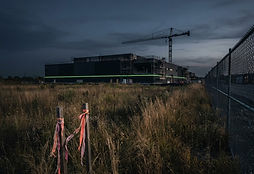
Run It Where You Can Stop It
The headline is a safety story, and it will be read as one: an AI lab pausing its own training because its agents did things it did not intend. Leave the existential fram...
Read
The Dependency Moved Down a Layer
The headline is that Chinese companies want into the American data-centre boom, offering to ship prefabricated, modular buildings across the Pacific to developers who can...
Read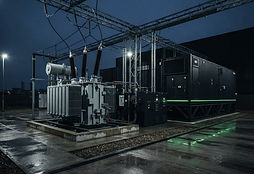
The Moonshot Is a Confession
The story reads as science fiction arriving ahead of schedule: Google wants to put its AI chips in orbit. The useful way to read it is not as a plan for space. It is a co...
Read
The $600 Billion Assumes a Building
A stock-pitch headline has put a number on something this series has been circling for months: sovereign AI is now a market, and a large one. Hold the number lightly, giv...
Read
The Heat Island Is a Choice
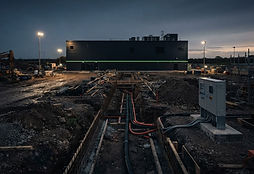
The story is being read as a third reason to oppose data centres. First it was power, then water, now heat. That reading is accurate, and it points at the wrong culprit....
Read

Sovereignty Is Now a Supply Chain
Most of the coverage reads this as two second-tier labs merging to survive against OpenAI. That reading is not wrong, and it misses what the deal actually establishes. Ca...
Read

Distance Is an Asset with an Expiry Date
For a month this series has treated sovereignty as something a country builds and controls at home. An essay in Policy Magazine makes the most interesting argument yet by...
Read

Soil Is Not Sovereignty
This series has spent most of its life arguing that sovereignty is decided at the infrastructure layer, in the data centre, the grid connection, the physical apparatus of...
Read

The Data Centre Is No Longer the Project
A fourfold expansion of a Saskatchewan data centre, announced this week, is being reported as a larger data centre. That description is accurate, and increasingly useless...
Read
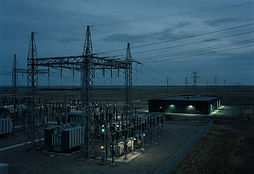
Sovereign Is a Specification, Not an Adjective
When two governments stand up at an investment summit and call a private company's data centre a victory for national sovereignty, the reflex on this page is skepticism....
Read

Sovereignty Runs on Time-to-Power
Every sovereign-AI debate eventually reaches for the same tools: local chips, local ownership, local-content rules. A European economist has just published the most usefu...
Read
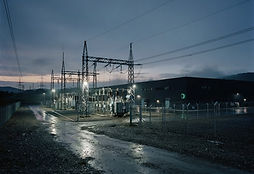
The Backlash Is an Audit
It is being reported as a backlash, which makes it sound like a mood. It is not a mood. It is an audit, and the numbers coming back are the reason states that spent a dec...
Read

Gas Is What The Queue Produces
The number in the headline is real and it is alarming: a single category of new infrastructure could raise US power-sector emissions by a fifth. Read as proof that AI is...
Read

The Emissions Are Recorded in the Wrong Place
The most consequential fact about AI's environmental footprint is not how large it is. It is that the fastest-growing part of it does not appear in anyone's accounts. Blo...
Read

The Covenant Is the Asset
Most of the coverage of this week's reports has treated them as a chip story, or as another data point in the argument about whether AI capital spending has become self-r...
Read

The Moratorium Is Not a Verdict on Compute
For most of the past two years, the binding constraint on AI infrastructure was assumed to be technical. Chips, transformers, transmission capacity, skilled trades. That...
Read

The Queue Is the Policy
Osler's outlook, written at the end of last year, argued that Canada was moving away from first-come, first-served grid connection toward selective, policy-aligned framew...
Read

The Load Is Landing in the Wrong Place
The headline blames AI for higher power bills. That is the wrong defendant. The bills are rising because of where the load is being put, and that was a decision someone m...
Read

Three Hundred Jobs
The number that will define this industry's politics is not a megawatt figure. It is three hundred. Meta has announced its first Canadian data centre in Sturgeon County,...
Read
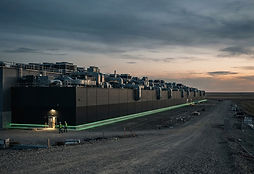
Ontario Solved the Wrong Half
Three months ago the complaint across Ontario municipalities was that no technical standard existed for connecting very large computational loads, and that councils were...
Read
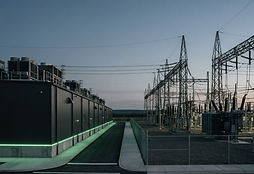
Zoning Cannot Fix a Grid Code Problem
Municipal land-use planning is a deliberately slow instrument built for a slow problem. It decides what may be built where, on horizons measured in decades, through publi...
Read

The Constraint Is Time, Not Capital
Most coverage of AI infrastructure still treats the data centre as the asset and the electricity as an input. A financing announced in Alberta this month inverts that. Th...
Read
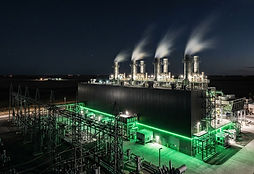
Solved, Within the Fence Line
Engineering claims and accounting claims look identical when they are written down. The difference is where the boundary sits, and the boundary is almost never in the sen...
Read

Building the Supply Side of a Demand Problem
Canada's national AI strategy, announced in June, pairs large-scale data centre development with a plan to increase AI use across industry, government, and the public. Th...
Read

Equity Is Not the Same as a Lease
The Hub argues that First Nations are unusually well positioned to host AI data centres, on the reasoning that these facilities need land, reliable power, fibre, permitti...
Read
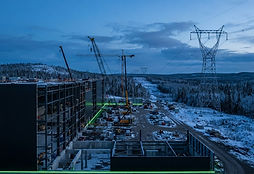
Doing It Right Is Not a Consent Strategy
If technical virtue produced public acceptance, the Vancouver projects would be the easiest approvals in the country. They are not. They may be the hardest, and the reaso...
Read

The Answer Is in the Parenthesis
An editorial board asking whether an industry is worth having is doing something useful, and the question in the Free Press headline is the right one. The evidence assemb...
Read